3 Days Tanzania Safari
3 Days in Lake Manyara, Serengeti & Ngorongoro Crater


A Small Park with Big Variety
Arusha National Park is a compact and scenic park on the doorstep of Arusha town, bringing together forest, crater, lakes, and the slopes of Mount Meru, one of Africa's great volcanoes.
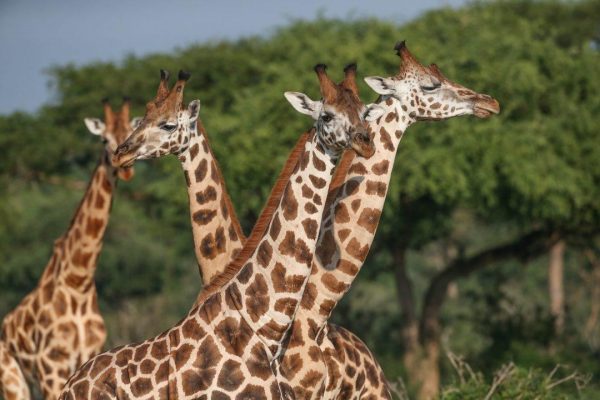
It is known for black-and-white colobus monkeys, giraffes, buffalo, hippos, and flamingos, and for the chance to explore on foot with a ranger, which is rare on a short Tanzania safari.
Because it is so close to town, it is perfect for a half-day or full-day trip on your arrival or departure day, or as a gentle start to a longer journey.
It is easy to reach, varied, and different from the bigger northern parks.
The park is short on distance but long on variety, so in a few hours you can drive through forest, see a crater, visit lakes, and look up at Mount Meru. It also suits travellers who like walking, birdwatching, or quiet scenery.
The park is known for its primates, giraffes, and birdlife.
Black-and-white colobus monkeys leap through the forest canopy, and blue monkeys and baboons are also seen. On the open grassland, giraffes, zebras, buffalo, and warthogs graze, while hippos relax in the lakes.
Leopards and elephants live in the park but are rarely seen. There are no lions here, so the experience is different from the big savannah parks, and it is gentler and quieter. Wildlife is wild and sightings can never be guaranteed.
A peaceful way to see wildlife close to town.
Three very different landscapes sit within one small park.
Ngurdoto Crater is a collapsed volcanic caldera with a forested rim and a swampy floor, often called a miniature Ngorongoro. Momella Lakes are a group of shallow alkaline lakes in different shades, attracting hippos and waterbirds, and often flamingos.
Mount Meru rises to 4,566 metres and dominates the park. On clear mornings, Kilimanjaro can sometimes be seen in the distance.
Forest, lake, and mountain, all in a single day trip.
Arusha National Park is one of the few northern parks where walking is a highlight.
With an armed park ranger, you can walk through forest and grassland, getting closer to the details of nature, from birds and butterflies to buffalo tracks. Walks can range from a short stroll to a half-day hike, such as to a waterfall.
Canoeing on the Small Momella Lake is also possible, offering a very quiet way to enjoy hippos and birdlife. Availability depends on park rules and conditions.
A gentle, active safari for those who enjoy moving at their own pace.
Mount Meru is a great alternative or warm-up for Kilimanjaro.
The Mount Meru climb starts in Arusha National Park and usually takes three to four days. It crosses forest and heath, then climbs along a dramatic crater rim. A ranger guide accompanies every climb.
Many travellers combine a Meru climb with a safari or use it to acclimatise before attempting Kilimanjaro.
A rewarding climb with great views and fewer crowds.
The park can be visited all year, and the dry months are the most comfortable.
June to October and January to February are generally the driest periods, with clearer skies and better chances of seeing Kilimanjaro and Mount Meru.
The long rains in March to May and the short rains in November bring greener scenery, but also muddy tracks and more cloud.
Flamingo numbers vary from year to year.
Tell us your dates and we will plan around them.
Arusha National Park is a natural first or last stop on a safari.
It is only a short drive from Arusha town and the airport, so it works well on the day you arrive or before you leave, without losing time on long transfers.
It pairs naturally with Tarangire, Lake Manyara, Ngorongoro Crater, and the Serengeti. You can also extend your journey with a Zanzibar beach holiday, or combine your safari with a Kilimanjaro climb.
Arusha National Park is easy to add to the start or end of any of these itineraries. Every trip can be adjusted to your dates, pace and interests.
3 Days in Lake Manyara, Serengeti & Ngorongoro Crater
4 Days in Tarangire, Serengeti & Ngorongoro Crater
5 Days in Tarangire, Serengeti & Ngorongoro
6 Days in Tarangire, Ngorongoro, Serengeti & Lake Manyara
Tell us your dates and how you imagine your Arusha National Park trip, and we’ll design a journey around you.
Every traveller has different priorities.
Some want an easy day trip near town. Others are drawn to walking safaris, colobus monkeys, canoeing, birdwatching, or a Mount Meru climb.
A private trip lets your itinerary be shaped around your interests, travel dates, preferred accommodation, and desired pace.
Talk to a Tanzania safari expert →Answers to the questions travellers ask most about Arusha National Park.
Arusha National Park is known for its black-and-white colobus monkeys, giraffes, Ngurdoto Crater, Momella Lakes, and Mount Meru. It is also one of the few northern Tanzanian parks where guided walking safaris are a highlight.
Many travellers visit for half a day or a full day. It works well on your arrival or departure day, or as a gentle first day of a longer safari. If you want to walk, canoe, or climb Mount Meru, you may need more time.
No. Arusha National Park has no lions. It offers colobus monkeys, giraffes, buffalo, hippos, and many birds, so it suits travellers who want scenery and walking. Travellers hoping for big cats usually add the Serengeti or Ngorongoro.
Yes. Guided walking safaris with an armed park ranger are one of the main highlights. Walks range from short strolls to longer hikes, depending on your interests, fitness, and park rules.
Flamingos are often seen on the Momella Lakes, but numbers vary with the season and water levels, so they cannot be guaranteed. Hippos and many other waterbirds are seen more reliably.
The park can be visited all year. June to October and January to February are generally the driest and clearest, with better chances of mountain views. The rainy months bring greener scenery but muddier tracks.
On clear days, particularly in the early morning, Kilimanjaro can sometimes be seen from parts of the park. Mount Meru itself is a dominant sight, but views depend on the weather and cannot be guaranteed.
Yes. The Mount Meru climb starts in Arusha National Park and usually takes three to four days, with a park ranger guide. It is a rewarding climb on its own and a good acclimatisation before Kilimanjaro.
It is close to Arusha town and the airport, usually under an hour by road, which makes it ideal for a short trip on arrival or departure day.
Share your preferred travel dates, number of travellers, activities of interest, accommodation style, and budget. Your trip can then be designed around your priorities, whether it is a short day trip or part of a longer journey across Tanzania.